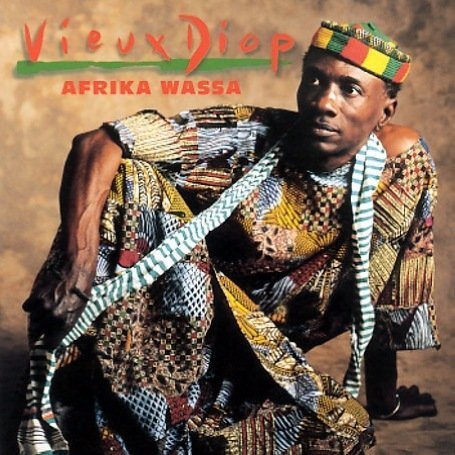
Vieux Diop

Tags

, , , ,

Warm blithesome textures, exquisite vocal harmonies, melange of traditional instruments – kora, xalam, talking drum – with synthesizers, guitars, and electric bass.  He wonders if he “can still hope for a better world.”  Such music promises a better world here and now.

Vieux Diop, Afrika Wassa, Triloka LLC/Gold Circle Entertainment, TR 8069-2 (2000).  Art Direction – Lisa KIng; Photography – Kvon.

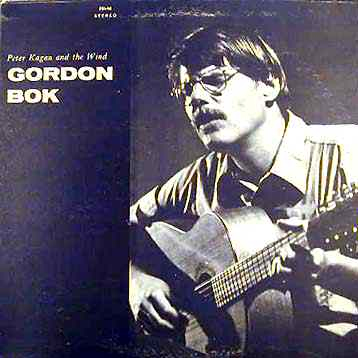
Gordon Bok

Tags

, ,

In the liner notes they call it a cante-fable – a combination of song and story-telling. “Peter Kagan and The Wind” by Gordon Bok is one of the most strange and beautiful recordings I have ever heard. It is a myth about a fisherman who marries a seal. He is caught at sea by the cold North Wind.

The Wind says: Listen, I got something to tell you.
Kagan, rowing: I don’t want to hear it.

Gordon Bok worked among the fishermen off the toast of Maine, he is a poet and plays one of the most singing ringing acoustic guitars on record.

Kagan is freezing dying until . . . . . . he dreams his wife comes down the smoking sea and she climbs into the dory with him . . . . .

Gordon Bok, “Peter Kagan and the Wind,” Machigonnne Music (BMI) (1971).  From Gordon Bok, Peter Kagan and the Wind, Folk Legacy Records, FSI-44 (1971).  Album design – not credited.

Busi Mhlongo

Tags

, , ,

She is exuberant, crazy, sweet – how can she sound so happy when she sings “My money is all gone“?  Listen!  She is so tough, insouciant, and completely inspiring!

Busi Mhlongo, Themba Ngcobo, Mkhalelwa Ngwazi, “Yaphel’Mali Yami,” M.E.L.T. 2000 Publishing Ltd. (2000).  From Busi Mhlongo, Urbanzulu, EMI Records, 7243 5 35130 2 3 (2001).  Sleeve Design – Swifty; Photography – Peter Williams.

Iron Maiden

Tags

, , , , , ,

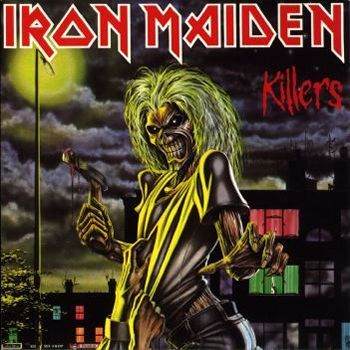
Like many other groups with great album covers – such as Miles Davis, Blind Faith, Yes, King Crimson, Little Feat, Herb Alpert, Alan Parsons, Santana, Duran Duran – this group might not have enjoyed half the notoriety it received if it did not have thought-provoking iconic album art. There’s something about Derek Riggs’ images of the cadaverous maleficent Eddie, a/k/a/ Edward The Head, that raises as many questions as are answered by the stories they tell. You just gotta look and look. Most notable is the cover of the single, “Flight of Icarus,” in which Eddie careens away on bat wings, having just used a flame thrower to incinerate the wings of the beautiful son of Daedalus.

And then while you’re looking at the album art, you notice the music. Each musician is a wonder because musicianship is a huge part of what this band is about. Thus, many of the songs have long instrumental introductions or instrumental interludes that diverge in rhythm and key signature from the song of which they are a part. Individual songs have segments that differ from one another in melody and tempo – and I do not mean they merely have a verse, chorus, and bridge – rather they have different movements. Steve Harris on bass occasionally rises above the tumult to take over from the driving dominance of the lead-guitar duo, Adrian Smith and Dave Murray. At times the bass, guitars, and drums, are slamming along in unison. Paul Di’Anno growls like Alberich in Das Rheingold and then he soars and squeals like a banshee. And the subject matters of the songs are gothic, mythological, religious, literary. In a word, the forms of Iron Maiden’s music are classical.

The brilliance of Di’Anno’s singing is spectacularly represented by the song “Purgatory.” Barking words so fast they can barely be sung then suddenly he glissandos a scream an octave high.

The protagonist of the song is trapped in a doldrum. His incorporeal self reaches out to past lives, past memories of love, while his corporeal body holds him back.

My body tries to leave my soul.
Or is it me, I just don’t know.
Memories rising from the past, the future’s shadow overcast.
Something’s clutching at my head, through the darkness I’ll be led.

He is caught in a purgatory between long dead pleasure and present living pain. The song ends with a hopeless begging refrain:

Please take me away, take me away, so far away.

I note the influence of the punks on the 1980’s new wave of British metal. The metalists adopted the drive, the frenzy, the rage. But they rejected a huge part of the punk sensibility – the folk ethos – the philosophy that ANYONE can do this music. So it is with Iron Maiden. Only the few, the chosen, the spectacular virtuosos, can play this music.

Steve Harris, “Purgatory,” No publisher (BMI) (1981).  From Iron Maiden, Killers, Harvest Records Limited, Capitol Records Inc., ST-12141 (1981).  Illustration – Derek Riggs; Album design – Not credited.

Julian Bream

Tags

, , , , ,

One of the most extraordinary things about Julian Bream is the way in performance, during a demanding passage, he bugs his eyes and sticks out his tongue in a manner that would terrorize a gargoyle.  Every time I see him do it I nearly jump out of my seat and run screaming out of the auditorium.

Here he is boys and girls.

The greatest guitarist that ever was.

Greater than Segovia.  Greater than Jeff Beck.  Greater than Chet Atkins.  Greater than John McLaughlin.  Greater than Steve Vai.  Greater than Jimi Hendrix.  Greater than Doc Watson.

But guitar ain’t enough for the greatest that ever was.

Here he is not playing guitar, but rather lute.  You can hear him play a piece by Francesco da Milano who died in 1543.  They called Francesco “Il Divino”, so consummate was his skill on the lute.

What other names are there for Bream but “Bream”?

Francesco da Milano, “Fantasia I in C minor,” No publisher (No date).  From Julian Bream, The Woods So Wild, RCA Records, LSC-3331 (1972).  Album design – Not credited.

Public Enemy

Tags

, , , , , , , ,

You would think it couldn’t happen more than once in a lifetime.

When I first heard “Don’t Believe the Hype” it was like the first time I heard “Whole Lotta Love.” Just as Led Zeppelin showed what rock’n’roll sounds like when it is played by gods, Public Enemy revealed the same for rap.

That basso molto profundo of Chuck D counterpoised with that biting jocose tenor of Flavor Flav laughing at you with that giant clock around his neck.

There is hardly a naughty word on this album and they don’t trash women. But that doesn’t mean they were insipid. The poetry. The poetry! Urgent righteous menacing raging thundering revolutionary!

And how could Terminator X twirl those turntables so they roared such horrible terrifying sirens and squeals and explosions?

And how could they all transform such sounds into the Music of the Spheres?

Public Enemy, It Takes a Nation of Millions to Hold Us Back, Def Jam Recordings, 314 527 358-2 (1988).  Album Design – Glen E. Friedman; Photography – Glen E. Friedman.

King Crimson

Tags

, , , , , , ,

This incarnation of the King was comprised of David Cross, Robert Fripp, John Wetton, Bill Buford, and Jamie Muir. I am enthralled by “Larks Tongues in Aspic, Part I.”

A kalimba close to the ear, pretty patterns over and over, grindings, ringings, scrapings. It is like moving through a pleasantly working galaxy of atoms and molecules all going about their business. Menacing enormity is near.

When I was a child, I would at night be clutched by a simultaneous sensation of absolute universal hard round enormity and absolute sharp brittle minuteness. This terror was called The Bigs and The Littles.

This music is like that. Horrible buzzing guitar, very distant. Gradually, a tribal beat takes over, drums like tin cans and garbage lids, wicked war drums, drums of ritual. Unconscious deep unnoticed bass solo. Like a spindly creature or a dry weed the violin spins a tale which is shouted away by pulsing guitar and voices from a soap opera, and the violin is frantic with melodrama. Sudden huge whirling of brilliant things and then it is dying dying tinkling tinkling softly tinkling dying. Shhhhhhhhh.

King Crimson, Larks Tongues in Aspic, Atlantic Records, SD 7263 (1973).  Album Design – Tantra Designs, London.

Leo Kottke

Tags

, , ,

Is there a greater acoustic guitar miraculist anywhere? How do the five fingers of the human lump and wires on a box of wood become at once so insouciant and inscrutable and incandescent? “This is the most beautiful name I ever heard,” he says of “Mona Ray” in the liner notes. Jeeze, I don’t think it’s such a great name. But, by god, this is one of the most beautiful guitar pieces I ever heard. Monstrous twelve string finger picking in beautiful duet with Mike Johnsen on a six string (at least that’s my guess at the instrumentation). Here we have an almost Elizabethan appoggiatos, and then a delicate descending folk melody, and now there a resplendent strumming air. And it returns again and again to the melody, and each turn is more unspeakably – well, beautiful – than the preceding. And then suddenly it ends, and we are. . . just here, in the silence.

Leo Kottke, Dreams and All That Stuff, Capitol Records, St-11335 (1974).  Album Design – John Van Hamersveld.